LOTTA
Our Lenses Will Never Be Transparent Again
Our Lenses Will Never Be Transparent Again
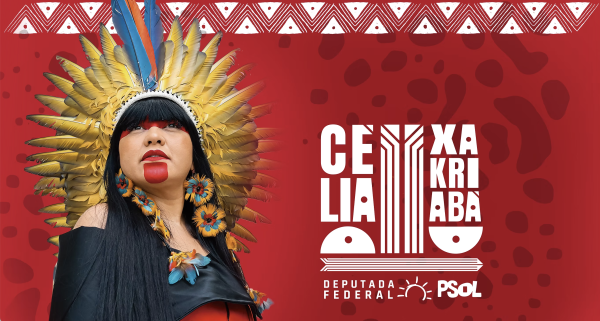
LOTTA’s account from Belém, after the speech by Célia Xakriabá
By LOTTA (CARLOTTA SARINA), who together with LILLO is documenting COP30 from the perspective of Indigenous peoples and the Cúpula dos Povos.
The Italian Version here
At this link, the reel created for Extinction Rebellion
Belém, November 12, 2025 | In Belém, in the crowded hall of Casa Marakà — a space for art and communication created by the Indigenous communities of the Amazon — the first Indigenous federal deputy of Minas Gerais, Célia Xakriabá, spoke about the importance of Indigenous information and communication:
“They didn’t talk about who we really are. It was communication about Indigenous peoples, not with Indigenous peoples. But from the moment we began making our own documentaries, every communicator tells the story through their own gaze.”
Célia explained that every journalist, every filmmaker, knows the boundary between the secret and the sacred.
“There are things that cannot be shown in a film, and we know how far we can go: the sacred is not exposed — it is protected.”
During the pandemic, when the Brazilian Congress tried to silence Indigenous mobilizations, a collective response was born:
“We decided to hold the Acampamento Terra Live online. Even if only ten people had listened, it would have been enough. After three days, thanks to Indigenous media, more than three million people were with us.”
Then she added, with a smile that embraced the room:
“In fact, Indigenous communication is not only anti-racist — it is before racism.”
That sentence struck me with its disarming simplicity. It says — without needing to explain — that it was we Westerners who invented the concept of racism and brought it to places where it didn’t even exist as an idea.
Speaking about cinema, Célia reflected on the fear that still surrounds the power of imagination:
“Do you know what they can’t stand? Seeing an Indigenous film win an Oscar. That’s what they can’t stand — that we have learned to fight with their own weapons. Only we do it our way: with joy, with irony, with ancestral spirit.”
When asked in the past whether there is a visual identity for Indigenous communication, she replied without hesitation:
“Yes. Our clothes, our garments, our skin — that is our visual identity.”
From her, I also learn this: that form can become substance, that voice and dress, in their authenticity, are language.
I investigate myself, study, and research to try to do the same in my music and my performances — not to represent something, but to embody it. Every gesture is political. Every choice communicates and has an impact on the world.
And then came her closing words — cutting through the air like a wave and making the entire room burst into applause:
“Our lenses will never be transparent again. Sometimes they carry the blood stains of those who flee from Mato Grosso do Sul to denounce violence. Sometimes they fog up with tears, or they’re tinted with jenipapo. But these lenses will never be transparent again, because today Indigenous communication is a sharp and direct arrow.”
It was a lesson in freedom.
Célia speaks of struggle, but she does so with the grace of someone who knows the lightness of the deepest truths: to go far, you don’t need to strike - you need to fly.
Be arrows, yes - but arrows that dance. Arrows that reach the heart not to wound, but to awaken. Arrows that cut through the air with irony and joy, just as music, dance, and poetry can.
And I think this is the greatest lesson of all: art exists to reveal truth without violating it, to bring back into the present what ancient cultures had already understood - that the world is not to be possessed, but to be cared for.
If we had listened to those cultures instead of erasing them, perhaps today we would not have a climate crisis to solve.
As LILLO writes in his article:
“Change will not come from a document, but from how we learn to intertwine our struggles.”
And I believe that the oldest struggles, the ones that rise from the Earth and not from power, are also the only ones capable of healing it.
LOTTA (Carlotta Sarina)
Belém, COP30 | The People’s COP
For more information:
Mirandola Comunicazione
Marisandra Lizzi
marisandra@mirandola.net
+39 348 3615042
Caricato il 11/11/2025
Organizzazione

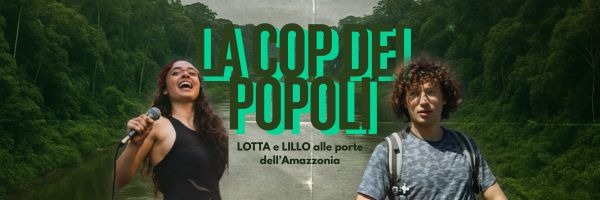 LA COP DEI POPOLI | LOTTA alla COP30 con LILLO (Lorenzo Barili)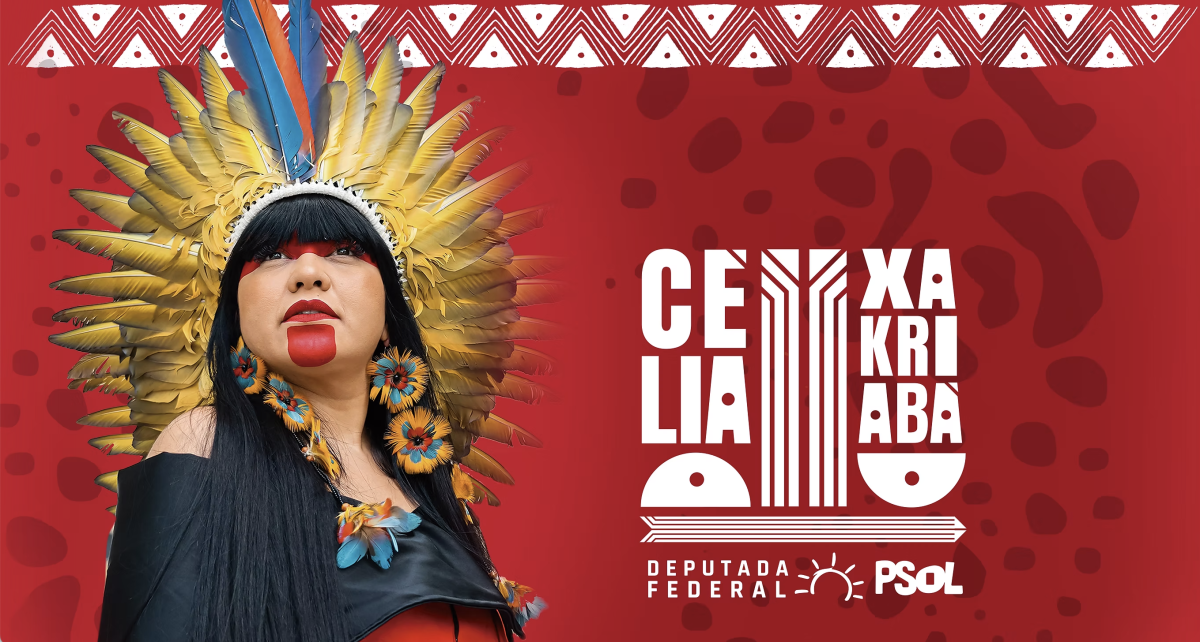
Settori
- Comunicazione
- Economia circolare / Sviluppo Sostenibile
- Giornalismo